A drill machine quotation is only useful when it reflects your material, hole geometry, production rate, workpiece envelope and required evidence of performance. By the end, you will have a supplier checklist covering machine selection, capacity, tooling, acceptance testing, safety, utilities and long-term support.
Key takeaways
- Give suppliers material, hole size, tolerance, batch size and duty-cycle data.
- Compare spindle travel, throat depth, table size and motor power against your parts.
- Test drilling, tapping, accuracy, guarding and utilities before signing acceptance.
- Check service response, spare parts, machine condition and downtime exposure.
Turn the Job Into Measurable Supplier Requirements
A supplier cannot size a drill machine from “steel parts with 20 mm holes.” Give the complete job envelope first, then require every quotation to use the same assumptions.
1. State the material grade and hardness, hole diameter range, hole depth, hole tolerance, positional-tolerance requirement, drill geometry, coolant method, and whether holes are through or blind.
2. Give workpiece length, width, height, maximum mass, clamping arrangement, and the number of holes and components required per shift. Include the largest part and the shortest cycle you must achieve.
3. Specify the required spindle-speed range, spindle taper such as MT3, MT4 or MT5, spindle travel, and any tapping sizes. Ask whether feed is manual, power-assisted, or CNC-controlled, and require feed overload protection, depth control, tapping synchronization, and automatic return to be identified.
4. State the plant conditions: pressure at the machine inlet, compressed-air flow in free-air-delivery terms, ISO 8573-1 particle, water, and oil classes, and whether consumption is intermittent or continuous.
Require capacity claims to separate drilling, tapping, annular-cutting, and continuous-production ratings. The supplier must identify the material, hardness, tool, cutting speed, feed, coolant condition, and duty cycle behind each rating. Compare spindle torque at your operating speed, not motor kW alone.
Ask for column or arm deflection under a defined radial load, table support, allowable workpiece mass, anchoring needs, and spindle runout at the nose and a stated gauge length after warm-up, using a named holder or test bar.
Choose the Machine Type and Compare Its Working Envelope
A pillar drill is economical for vertical holes in repeatable workholding; it is the wrong choice for multiple faces, close positional tolerances, or automatic tapping. Choose by access and production duty, not by maximum drill diameter alone.
| Option | Right choice | Wrong choice |
|---|---|---|
| Pillar drill | Fixed-height work, manual drilling, low-to-medium batch volumes | Large parts, indexed holes, controlled tapping, or tight positional tolerances |
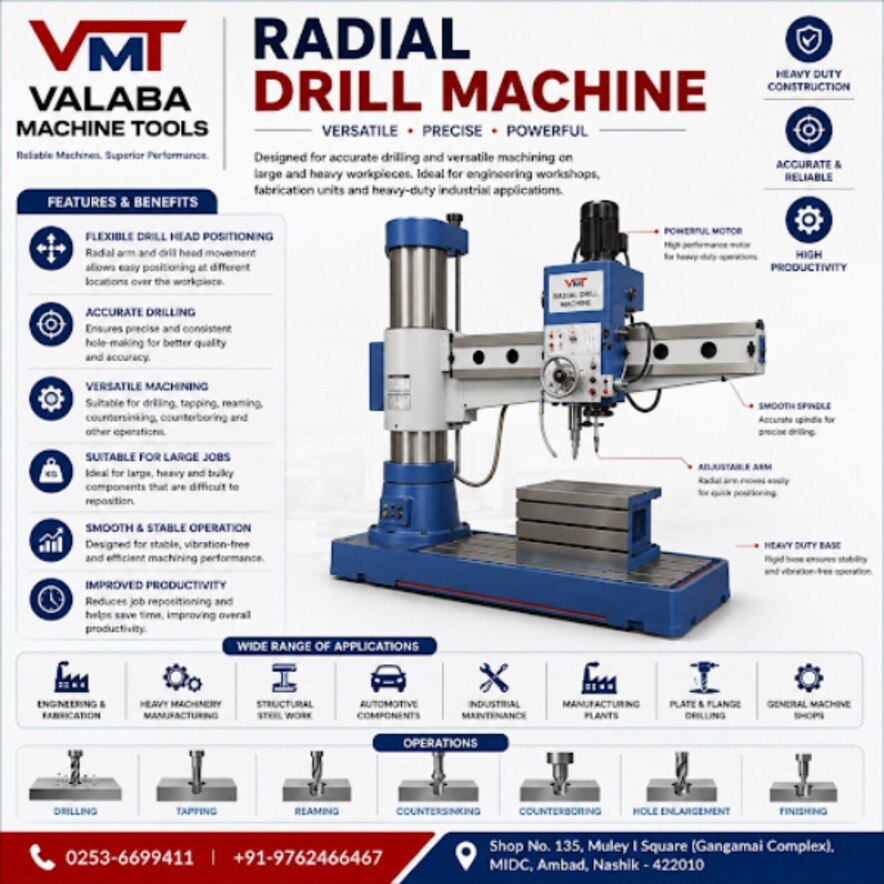
| Radial drill | Heavy or wide workpieces that must stay on the table while the head reaches different locations | Small repetitive parts where rapid cycle time and CNC positioning matter |
| Drilling-and-tapping machine | Sequential drilling and tapping with controlled depth, feed, and automatic reversal | Complex contours, many tool changes, or simultaneous multi-face machining |
| CNC machining centre | Accurate holes across several faces, interpolated features, and mixed milling operations | Simple one-hole jobs where programming and setup exceed the value |
| Dedicated tapping machine | High-volume tapped holes with standard sizes and short cycles | Jobs dominated by drilling, milling, variable hole locations, or frequent size changes |
Compare the usable envelope: throat distance, spindle-to-table and spindle-to-base ranges, quill stroke, minimum and maximum spindle height, table rotation or tilt, interference zones, and allowable workpiece mass. A 40 mm rating is meaningless if the casting collides with your fixture or the part overhangs the table.
Request torque at your operating speed, not only motor kW. Confirm whether feed is manual, power-assisted, or CNC-controlled, plus overload protection, depth control, tapping synchronisation, and automatic return. Separate drilling, tapping, annular-cutting, and continuous-duty capacities; require the material, tool, speed, feed, coolant, and duty cycle behind each claim.
Demand Comparable Specifications and Realistic Capacity Claims
Require the quotation to show how each rating applies to your job, not just a catalogue maximum. Compare spindle torque at the required operating speed alongside motor power: large-diameter drilling needs low-speed torque and gearbox thermal capacity, while small drills need stable high-speed performance.
Ask for these specification and evidence details:
- State the spindle-speed range, torque–speed curve, gearbox duty cycle, motor rating, feed type, spindle travel, column diameter, throat depth, table size and allowable workpiece mass.
- Identify the complete tooling interface: MT3, MT4 or MT5 spindle taper, drawbar specification, maximum tool mass, permitted overhang, supplied holders and adapters. MT, ISO/BT, CAT and HSK are not interchangeable; an adapter can reduce rigidity and Z-axis clearance.
- Separate maximum drilling, tapping and annular-cutting capacities. Record the material grade and hardness, drill geometry, cutting speed, feed, coolant condition and duty cycle behind every capacity claim.
- Include a documented acceptance test using ISO 230-1 for geometric accuracy and ISO 230-3 for thermal effects, with measuring equipment, reference temperature, warm-up time and pass/fail limits.
- Require deflection data under a defined radial load, table-support details, anchoring requirements and vibration limits. Structure compliance produces chatter, oversize holes and short tool life.
| Claim | Require in the quotation | Reject or investigate |
|---|---|---|
| Maximum drill diameter | Material, tool, speed, feed and duty cycle | One figure for every material |
| Tapping capacity | Thread size, pitch, torque and machine cycle | Capacity without torque data |
| Production suitability | Continuous-cycle trial results and temperature change | Short-duration demonstration only |
Test Accuracy, Tapping Performance, Safety and Utilities Before Acceptance
1. Put the acceptance test in the purchase order, not in a verbal promise. Require geometric checks to ISO 230-1, naming the machine condition, measuring equipment, reference temperature, warm-up procedure and pass/fail limits. Include a production trial using your material, tool, hole sizes and positional tolerances.
2. Measure spindle runout at the spindle nose and at a defined gauge length with the specified toolholder or test bar. Record indicator resolution, holder condition and spindle warm-up state; a runout figure without these details cannot support a supplier comparison.
Check hole diameter, depth and location after machining, then repeat the test at the intended production speed.
3. Prove tapping under load rather than accepting a nominal tapping capacity. Test rigid tapping and reversing tapping with the required thread sizes, pitch and material, and verify synchronization, depth control, automatic return and safe reversal. Record whether feed is manual, power-assisted or CNC-controlled, and confirm feed-hold and overload protection.
4. Inspect the safeguards and plant interfaces before signing acceptance. Test the emergency stop, guards, interlocks and protective circuits, and request the electrical schematic, short-circuit rating, supply and control-voltage requirements under IEC 60204-1.
For compressed air, record inlet pressure, continuous or intermittent free-air delivery, and ISO 8573-1 particle, water and oil classes; then verify earthing, protective devices, filtration, dew point and compressor capacity. Include thermal checks to ISO 230-3, covering warm-up time, spindle-speed limits, coolant-temperature assumptions and hole-location change during the production cycle.
Evaluate Condition, Service Support and Total Downtime Risk
A new machine reduces hidden wear risk, but it does not guarantee fast recovery after a failure. A refurbished machine is worthwhile only when the supplier documents replaced parts, alignment checks, electrical testing and remaining-life assumptions. A used machine costs less upfront, yet unknown wear can turn a bargain into prolonged downtime.
| Option | Condition evidence | Downtime risk |
|---|---|---|
| New | Factory test records, complete manuals and commissioning scope | Lower wear risk; confirm local parts and technician availability |
| Refurbished | Replaced components, measured accuracy, load test and refurbishment date | Moderate; warranty matters less than documented repair depth |
| Used | Service history, operating hours, inspection access and live demonstration | Highest; budget for bearings, belts, seals, pumps and control faults |
Inspect the machine under your process load. Reject unexplained gearbox noise, excessive spindle-bearing play, vibration or chatter. Compare spindle torque at the required speed, not motor kW alone; large low-speed holes can expose weak torque or gearbox thermal capacity. Include warm-up time and hole-location drift in the trial, using ISO 230-3 where thermal effects matter.
Ask for a completed parts-and-service matrix covering:
- Guaranteed response time and local service capability
- Stocked wear parts, prices and lead times
- Control and drive obsolescence policy
- Software or parameter backup and remote-support access
- Safety documentation against IEC 60204-1, with guards and emergency-stop behaviour checked on the supplied machine
Valaba Machine Tools is worth comparing on this evidence, not on catalogue range: require the same matrix, acceptance records and downtime assumptions from every supplier.
Related products
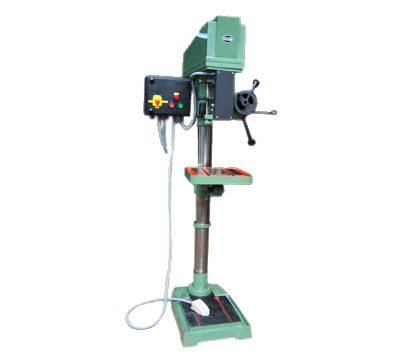 | DRILL MACHINE A flourishing enterprise in this domain, engaged in presenting a wide range of Drilling Cum Tapping Machine. View product → |
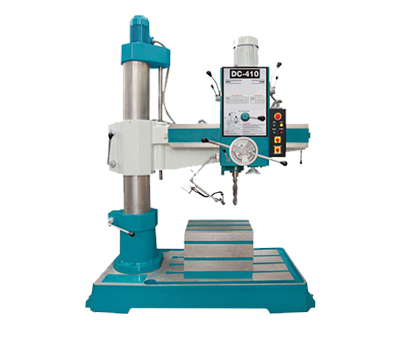 | DRILL MACHINE A Radial Drill Machine is a versatile industrial drilling machine designed for accurate and efficient drilling, tapping, reaming, countersinking, and... View product → |
Frequently asked questions
What information should you give a drill machine supplier?
Provide the material grade, workpiece dimensions, hole diameters and depths, positional tolerance, batch size, production rate, tooling, tapping needs and duty cycle.
How do you compare the working envelope of drill machines?
Compare spindle travel, throat depth, column clearance, table dimensions, table load, maximum workpiece height and the machine’s access to your largest part.
Which specifications should you verify before buying?
Request comparable figures for drilling capacity, spindle speed range, spindle taper, motor power, feed range, tapping capacity and stated capacity in your actual material.
What should you test before accepting an industrial drill machine?
Run representative drilling and tapping tests, measure hole position and size, inspect guarding and emergency stops, and confirm electrical, compressed-air and floor requirements.
How can you evaluate supplier support and downtime risk?
Ask for service response times, spare-parts availability, warranty terms, commissioning scope, maintenance instructions and references for comparable industrial installations.
Related products
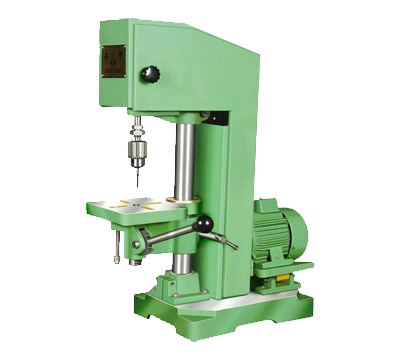 | DRILL MACHINE Our organization is widely appreciated in offering Drill Tapping Machine to our clients. Offered range is highly useful in different applications. View product → |
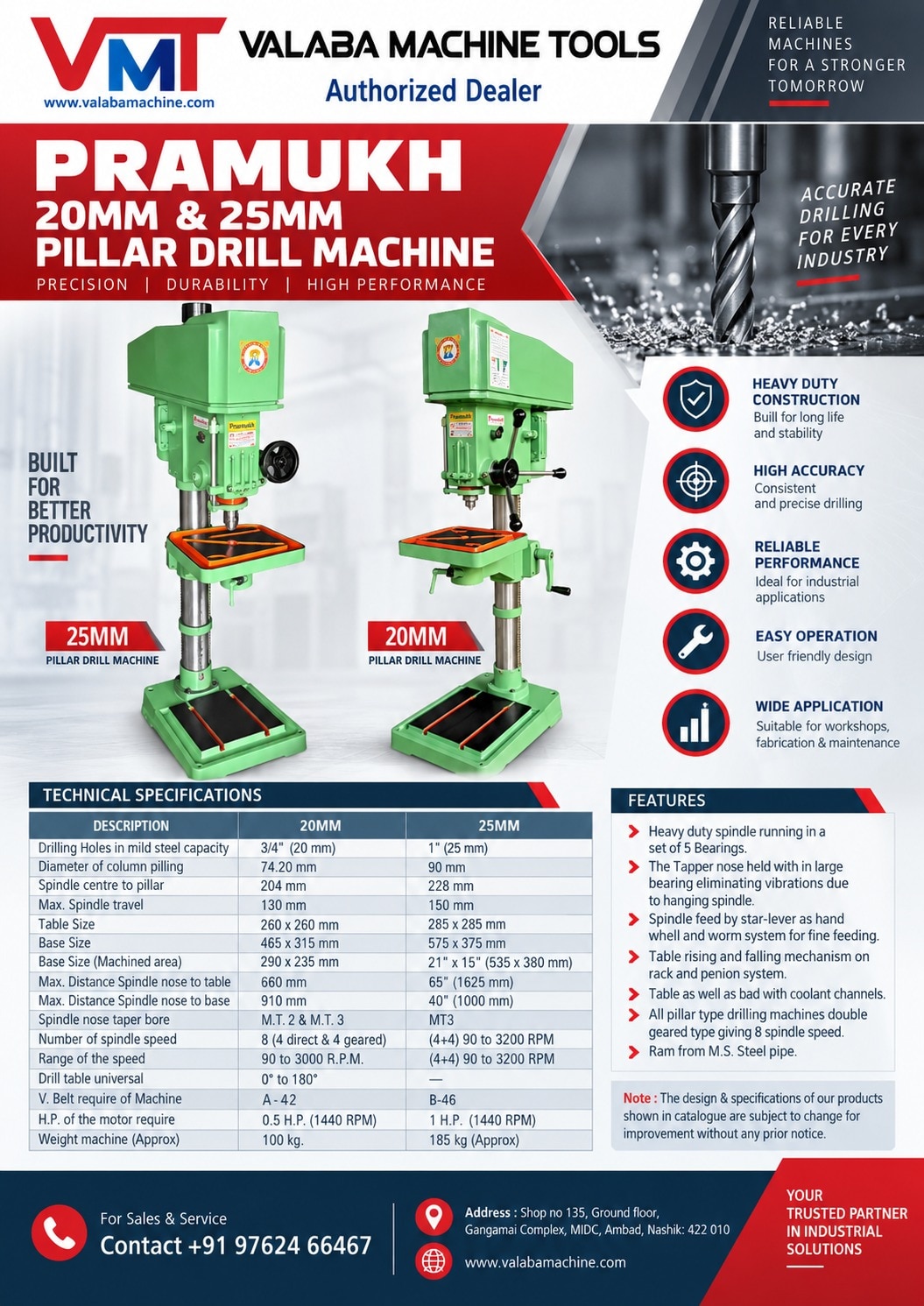 | DRILL MACHINE Our vision is to become leader in supply of all types of quality drilling machines at affordable price with complete satisfaction to the customers. View product → |