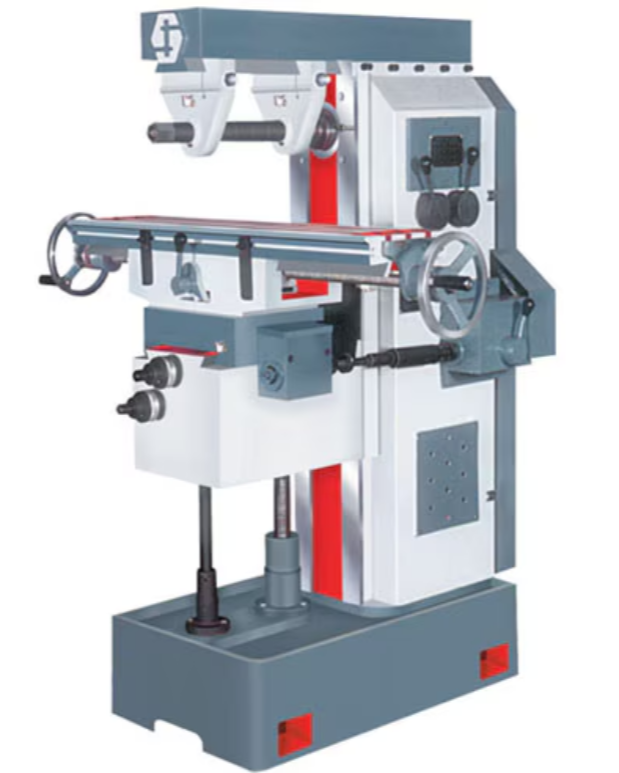
A milling machine can remain productive for years, making the purchase more significant than an ordinary equipment order. Capacity, rigidity, spindle configuration, table movement, tooling compatibility, service requirements, and workshop layout all need consideration before a machine is finalised.
For procurement teams comparing a milling machine dealer, a structured checklist can prevent important operational requirements from being overlooked.
This is particularly useful for machine shops, fabrication businesses, maintenance departments, and component manufacturers across Nashik, Maharashtra.
Define the Workpiece Range
Start with the components the machine needs to accommodate.
Document the typical and maximum:
- Component length
- Component width
- Component height
- Workpiece weight
- Material type
- Machining depth
- Required dimensional accuracy
The goal is not simply to purchase the largest available machine. Excess capacity may increase cost and occupy valuable floor space without improving the work actually being performed.
List the Required Operations
Milling machines may be used for face milling, slotting, drilling, profile work, keyways, step machining, and various tool-room operations.
Create a list of frequent jobs and identify which capabilities are essential.
This allows different machine proposals to be evaluated against actual production needs rather than general specifications.
Review Table Capacity and Travel
Table dimensions are important, but available axis travel is equally significant.
Confirm that the required component and work-holding arrangement can be accommodated while still allowing sufficient movement for the machining operation.
Remember that a vice, fixture, rotary device, or other accessory can change the usable working envelope.
Examine Spindle and Speed Requirements
The appropriate spindle configuration depends on tooling and application.
Speed range should be suitable for the cutters and materials commonly used. Motor capacity should also be assessed in relation to intended machining operations rather than viewed as an isolated performance number.
When speaking with a milling machine dealer, provide examples of representative components wherever possible.
Evaluate Rigidity and Machine Condition
Machine stability influences machining performance.
Bed and column construction, table movement, spindle condition, alignment, and backlash should all receive attention.
For precision-oriented work, inspection practices and machine condition become especially important.
Check Tooling and Accessories
Determine what is included with the machine and what needs to be purchased separately.
Depending on the application, requirements may include:
- Machine vice
- Collets
- Arbors
- Tool holders
- Clamping kits
- Cutting tools
- Coolant arrangement
- Digital readout
- Measuring equipment
The tooling budget can materially affect the total investment required to make the machine production-ready.
Inspect the Proposed Installation Area
Confirm floor space, electrical supply, access for machine movement, operator clearance, maintenance space, and material-handling routes before placing an order.
This is especially important in existing Nashik industrial facilities where floor layouts may already be tightly utilised.
Ask About Maintenance Readiness
Understand lubrication points, routine checks, recommended maintenance practices, and service considerations before the machine enters production.
Valaba Machine Tools can be evaluated by industrial buyers looking for machine-tool solutions in Nashik and the wider Maharashtra manufacturing market.
A good milling-machine purchase is one where capacity, tooling, machine condition, operating requirements, installation, and maintenance have all been considered before approval. Using a practical checklist helps procurement teams compare proposals on their ability to perform real work rather than making a decision based primarily on price.
Keywords