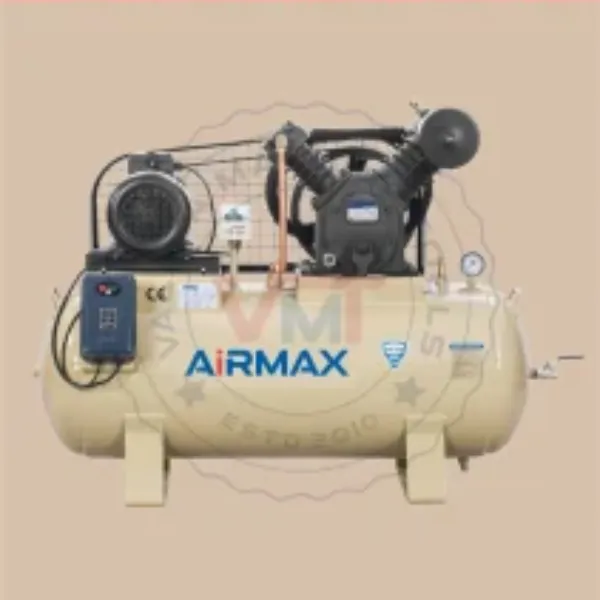
Reciprocating compressors remain relevant across many workshops because they can be well suited to applications where compressed-air demand is intermittent or varies during the working day. The key is determining whether this compressor type matches the actual usage pattern.
When evaluating a reciprocating air compressor supplier, buyers should focus on air demand, pressure, duty requirements, receiver capacity, maintenance access, and installation conditions.
These considerations are particularly useful for fabrication units, garages, engineering workshops, maintenance departments, and smaller production facilities in Nashik, Maharashtra.
Understand How the Compressor Works
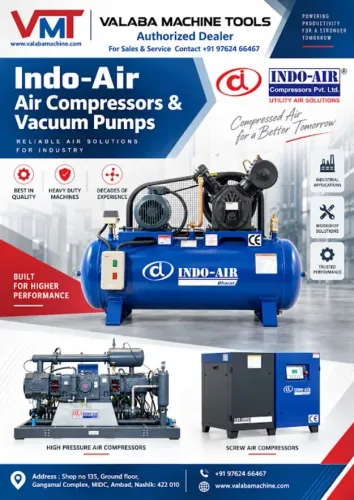
A reciprocating compressor uses piston movement inside a cylinder to compress air. Depending on design and required pressure, configurations can include single-stage and multi-stage arrangements.
The technology is established and widely understood by maintenance teams.
However, suitability should always be determined by the intended operating pattern rather than familiarity alone.
Identify Whether Demand Is Intermittent
Reciprocating compressors are commonly considered for applications where air demand is not continuously at a high level.
Typical workshop uses may include:
- Pneumatic hand tools
- Intermittent cleaning
- Small fabrication operations
- Maintenance work
- Tyre inflation
- Certain pneumatic machines
- General service-air requirements
If a facility has substantial continuous compressed-air consumption across multiple shifts, other compressor configurations may also need evaluation.
Compare Free Air Delivery
Motor rating alone does not tell buyers how much usable compressed air a system will provide.
Air delivery at the required working pressure is an important specification to review. Compare the compressor's output with estimated simultaneous consumption and allow an appropriate margin for operational fluctuations.
An experienced reciprocating air compressor supplier should be able to discuss required airflow rather than relying only on horsepower as the basis for selection.
Check Receiver Capacity
The air receiver stores compressed air and can help accommodate short periods of changing demand.
Receiver sizing should form part of the overall system assessment. It should not be treated simply as a larger-is-better decision.
Drainage is also important because moisture can collect in the receiver and compressed-air network.
Consider Heat and Ventilation
Compressing air generates heat.
The compressor should be installed in an area with appropriate ventilation and sufficient clearance for inspection and maintenance. Poor ventilation can contribute to high operating temperatures and may affect reliability.
Installation should also consider piping connections, electrical supply, vibration, accessibility, and safe movement around the equipment.
Review Maintenance Before Purchasing
Reciprocating compressors have components requiring periodic attention.
Depending on the model, maintenance can include checking lubricant, belts, filters, valves, fasteners, drains, and other wear components.
Maintenance teams should understand recommended service intervals and ensure routine inspections are incorporated into workshop schedules.
Valaba Machine Tools serves engineering and manufacturing customers evaluating industrial machinery and compressed-air equipment in Nashik.
The purchasing decision should ultimately be based on operating reality. A reciprocating compressor can be a practical solution when its airflow, pressure, duty pattern, receiver arrangement, and maintenance requirements correspond with the workshop's needs. Providing a supplier with accurate information about air-consuming equipment and daily usage is therefore one of the most useful steps a buyer can take before requesting a final recommendation.
Keywords