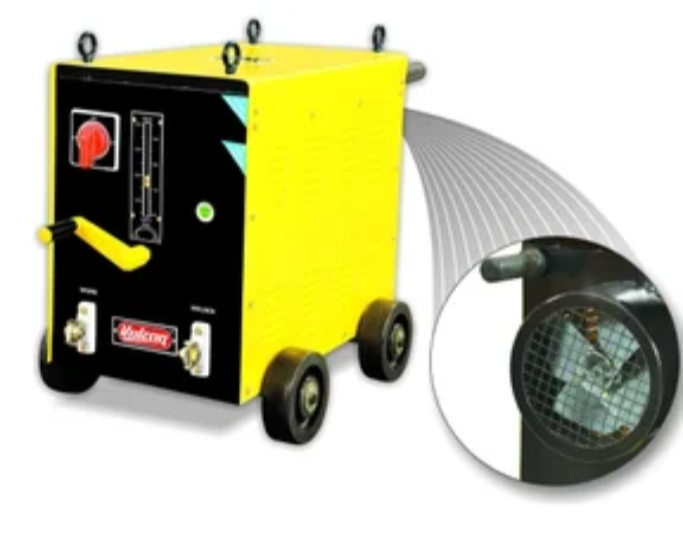
Welding equipment affects far more than the ability to create an arc. Material type, thickness, joint design, welding process, production frequency, power availability, consumable requirements, and operator capability all influence which machine is suitable.
For fabrication businesses evaluating a welding machine supplier, the first requirement should therefore be a clear understanding of the welding work performed in the facility.
Nashik, Maharashtra, has a broad engineering and fabrication base serving automotive, machinery, structural, maintenance, and industrial markets, making application-specific equipment selection particularly important.
Identify the Welding Process
Different welding processes are suited to different applications.
Before comparing machines, establish which process is required for the materials, component geometry, production conditions, and desired weld characteristics.
Avoid choosing a machine simply because a particular process is familiar to the workshop.
The welding procedure should correspond with the engineering requirements of the job.
Document the Material Range
Provide the supplier with realistic information about the materials being welded.
Important details include:
- Material type
- Minimum thickness
- Maximum thickness
- Joint configuration
- Component dimensions
- Welding position
- Typical weld length
- Production frequency
This helps determine the required output range and machine configuration.
Understand Duty Cycle
Duty cycle is particularly important in industrial welding.
A machine used for occasional maintenance welds has a different operating requirement from equipment used repeatedly in a fabrication production environment.
Compare duty-cycle information at the specified output rather than focusing only on maximum amperage.
A capable welding machine supplier should be able to explain how the machine's rated performance relates to the intended workload.
Check Electrical Availability
Industrial welding machines can have specific input-power requirements.
Before purchasing, verify the electrical supply available at the installation point. Consider input voltage, phase requirements, protective devices, cable sizing, earthing, and other electrical requirements according to the equipment manufacturer's guidance and applicable standards.
This assessment should be completed before installation rather than after equipment arrives.
Include Consumables and Accessories
The machine is only part of the working welding setup.
Depending on the process, the workshop may require torches, electrode holders, earth clamps, cables, regulators, gas equipment, electrodes, filler wire, tungsten electrodes, contact tips, and other consumables.
Suitable personal protective equipment and welding screens are also essential parts of a safe working environment.
Consider Fume Management
Welding can generate fumes and gases that need appropriate control.
The required ventilation or extraction arrangement depends on the process, materials, consumables, workplace configuration, and applicable occupational-safety requirements.
Equipment selection should therefore take place within a broader safe-work planning process.
Ask About Maintenance and Support
Before purchase, understand routine inspection requirements and the availability of suitable consumables and wear parts.
Valaba Machine Tools supplies industrial equipment for engineering and manufacturing applications in Nashik, including welding-related requirements.
A supplier should ultimately help a buyer connect machine specifications with real fabrication conditions. When process, material, thickness, duty cycle, electrical supply, accessories, safety requirements, and maintenance are reviewed together, the resulting purchase is more likely to support dependable workshop operations.
Keywords