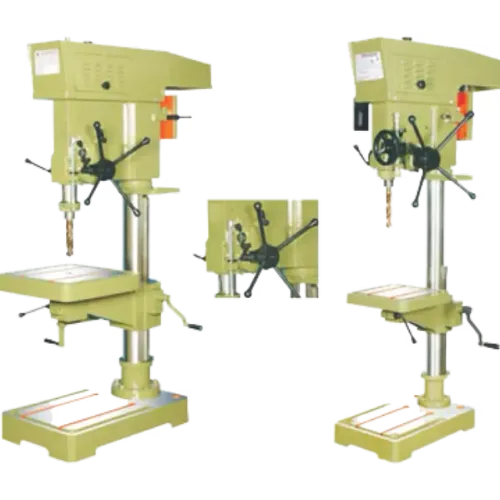

Drilling may appear to be a straightforward machining operation, but the machine selected for the job can influence hole accuracy, production speed, tool life, and operator convenience. Choosing an appropriate drill machine supplier therefore begins with understanding what the machine will actually be expected to do.
Engineering businesses in Nashik, Maharashtra, use drilling machines for applications ranging from routine maintenance work to repeated production drilling in fabricated parts and machined components.
Different Jobs Need Different Drilling Capabilities
Not every workshop requires the same drilling machine.
A maintenance department may primarily need a versatile machine for occasional repair jobs. A fabrication unit may regularly drill structural components, while an automotive component manufacturer could require greater consistency across repetitive operations.
Before selecting equipment, identify:
- Common hole diameters
- Workpiece dimensions
- Material thickness
- Material type
- Production frequency
- Required spindle speeds
- Accuracy expectations
- Tapping requirements
- Available workspace
These factors provide a much stronger basis for machine selection than simply choosing a familiar model.
Drilling Capacity Needs Proper Interpretation
Maximum drilling capacity is an important specification, but it should not be treated as the only selection criterion.
Motor power, spindle taper, spindle travel, speed range, column construction, table dimensions, and overall rigidity can affect how the machine performs during actual operations.
For example, drilling a relatively large hole occasionally is different from performing the same operation repeatedly during a production shift. Continuous industrial use can place greater demands on the machine.
Match Speed Range With Workpiece Materials
Cutting conditions vary according to drill diameter, tool material, and workpiece material.
Steel, aluminium, cast iron, and other engineering materials may require different spindle speeds and feed practices. A machine with an appropriate speed range gives operators greater flexibility to establish suitable cutting conditions.
Using unsuitable speeds can contribute to excessive heat, poor hole quality, accelerated tool wear, and inefficient production.
A knowledgeable drill machine supplier should therefore help buyers understand whether a machine's speed range and power are appropriate for their intended materials and operations.
Pay Attention to Work Holding
Accurate drilling depends on more than the spindle.
The workpiece needs to be positioned and held securely. Depending on the job, this may involve a machine vice, clamps, fixtures, jigs, or specially designed work-holding arrangements.
Table size and adjustment should therefore be evaluated alongside drilling capacity.
For repetitive manufacturing, a suitable fixture can also reduce setup time and help maintain consistency between components.
Evaluate Ease of Maintenance
Industrial equipment should be considered from a long-term operating perspective.
Ask how routine lubrication is performed, which parts require periodic inspection, whether belts or other wear components are easily accessible, and what basic maintenance operators should perform.
Keeping a drilling machine clean, correctly lubricated, and properly adjusted can contribute significantly to reliable performance.
Make the Purchase Around the Application
Nashik has a substantial base of engineering, fabrication, automotive, and industrial manufacturing businesses. Their drilling requirements can differ considerably even when two companies appear to perform similar work.
Valaba Machine Tools serves industrial customers evaluating machine tools and workshop equipment in this regional manufacturing environment.
A sensible selection process starts with the workpiece and ends with the machine specification. When drilling capacity, materials, operating frequency, speed range, rigidity, work holding, and maintenance requirements are evaluated together, businesses are better positioned to choose equipment suited to everyday production rather than simply buying on headline specifications.