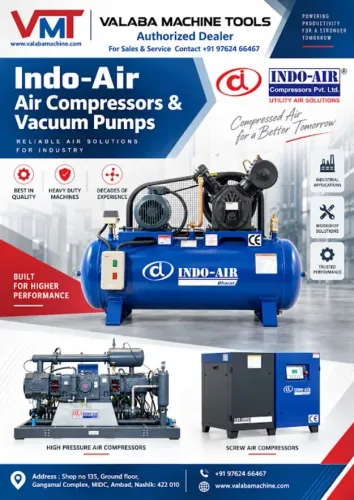
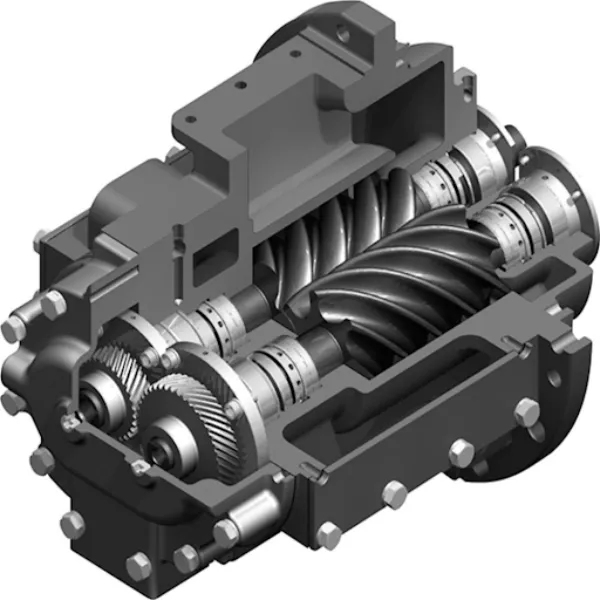
Manufacturing plants with sustained compressed-air demand need to think differently about compressor selection than workshops using air only occasionally. Where production lines, pneumatic machinery, automation, and tools consume compressed air for extended periods, a screw compressor may become an appropriate option.
A rotary screw air compressor supplier should help determine whether the operating profile justifies this type of equipment and what capacity is suitable.
For industrial facilities in Nashik, Maharashtra, the decision is particularly relevant where compressed air functions as a production utility across long shifts.
Look at the Demand Pattern
Rotary screw compressors are commonly associated with applications requiring relatively sustained compressed-air delivery.
Instead of asking whether screw technology is generally better, ask whether it matches the plant's air-demand profile.
Production managers should document:
- Average airflow requirement
- Peak airflow
- Working pressure
- Number of operating shifts
- Hours of compressor operation
- Demand fluctuations
- Planned equipment additions
This information provides the foundation for meaningful equipment selection.
Avoid Sizing Only for the Peak
Designing a compressor system entirely around a short-duration peak can result in excessive capacity during normal production.
Conversely, sizing only for average demand without considering realistic peaks can lead to pressure problems.
The objective is to understand the complete demand profile.
Where air consumption varies significantly, the control method and overall compressor arrangement become especially important.
Evaluate Energy Consumption
Compressed-air generation can represent a notable electrical load in a manufacturing facility.
Energy performance is therefore an important evaluation criterion.
Operating pressure should be reviewed carefully because producing air at a higher pressure than necessary can increase energy consumption. Air leaks, clogged filters, excessive pressure drops, and inappropriate control settings can further increase system costs.
A competent rotary screw air compressor supplier should discuss the compressor within the context of the complete compressed-air network.
Do Not Ignore Air Treatment
Compressed air leaving the compressor may require treatment before reaching production equipment.
The appropriate combination of receivers, dryers, filters, separators, and drains depends on the required air quality and system design.
For example, pneumatic tools, instrumentation, painting operations, and specialised manufacturing processes can have different requirements.
The objective should be to achieve suitable air quality at the point of use without creating unnecessary pressure loss.
Assess the Installation Area
A compressor room should support reliable operation and convenient maintenance.
Important considerations include:
- Ventilation
- Heat rejection
- Electrical supply
- Maintenance clearance
- Intake-air conditions
- Drainage
- Piping design
- Noise management
A technically suitable compressor placed in a poorly planned environment may not deliver the reliability expected from the investment.
Examine Long-Term Service Requirements
Continuous-production equipment needs a clear maintenance plan.
Filters, lubricants where applicable, separators, cooling systems, drive components, and other service items require attention according to manufacturer recommendations.
Valaba Machine Tools works with manufacturing and engineering businesses in Nashik evaluating industrial machinery and compressed-air solutions.
A screw compressor purchase should therefore begin with plant data rather than a catalogue. By understanding airflow patterns, pressure, shift duration, air-quality needs, installation conditions, and future expansion, businesses can determine whether the technology fits their operation and what system configuration can support production reliably.
Keywords