A dry vacuum pump is not selected merely because a process is labelled oil-free. By the end, you will be able to connect the pump to the right equipment, judge whether the duty is continuous or intermittent, and specify the protection and capacity needed for the gas, vapour, liquid and solids entering the system.
Key takeaways
- Use dry pumps for oil-free vacuum in machining, packaging, plastics and fluid handling.
- Match pump capacity and ultimate vacuum to the machine’s actual cycle demand.
- Specify filtration when dust, chips, resin vapour or liquid carryover enters the pump.
- Check temperature, chemical compatibility, noise, maintenance access and control requirements before purchase.
Which industrial machines use dry vacuum pumps?
Dry vacuum pumps serve machines that remove air, create holding force, or move material without introducing oil into the process.
| Machine or system | Connection | Purpose and duty |
|---|---|---|
| Vacuum packaging machine | Pump line to sealing chamber | Removes air before sealing; cycles repeatedly throughout packaging production. |
| Pick-and-place automation | Vacuum cups on robot tooling | Grips cartons, sheet metal or electronic components; cycles with each transfer. |
| Vacuum forming or thermoforming | Mould vacuum ports | Pulls heated plastic against a mould; cycles per sheet or part. |
| Plastics handling system | Hopper loader or transfer line | Lifts and transfers pellets or trim; often runs continuously. |
| Laboratory process equipment | Vessel, flask or chamber connection | Evacuates vessels for filtration, drying or controlled processing; usually intermittent. |
| Pneumatic conveying | Separator and conveying pipeline | Moves powders or production waste; runs continuously or to a level-control signal. |
| Vacuum lifting | Lifting frame and suction pads | Handles plates, blanks and machined parts; cycles with loading operations. |
| Vacuum impregnation or degassing | Chamber, resin vessel and liquid trap | Removes air from porous castings, resins and compounds before filling; runs in batches. |
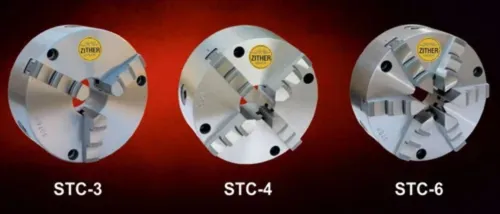
| Vacuum clamping | Fixture plate, chuck or table | Holds workpieces during machining, routing or assembly; runs while the part is secured. |
These systems appear in food processing, pharmaceutical production, electronics, plastics, woodworking, printing, packaging and general manufacturing. A liquid trap and isolation valve protect the pump during resin work, while filters protect it during conveying.
Central vacuum service can supply several machines continuously, but packaging, lifting, clamping and robot handling usually create repeated demand cycles. Piping, receiver volume and simultaneous machine demand then determine whether the vacuum remains stable.
Where does vacuum workholding improve machining and production?
Vacuum workholding improves production when a part cannot be clamped without distortion. On CNC machining centres, vacuum chucks and fixture plates hold thin, irregular, non-ferrous parts, composites and sheet components that magnetic chucks cannot secure.
- Use vacuum tables for CNC routing, drilling and cutting when open-grid surfaces or uncovered zones create continuous leakage.
- Choose flow capacity over ultimate vacuum for porous stock, unfinished cast surfaces and fixtures with large leakage paths.
- Fit grinding equipment with a liquid separator and particulate filter; coolant aerosol and grinding swarf can otherwise reach the pump.
- Connect automated loading systems to vacuum chucks for repeatable loading and unloading of small or thin workpieces.
- Use vacuum lifting for steel plate, blanks and machined parts when sealed contact is difficult.
A high-vacuum, low-flow pump suits a well-sealed part; a lower-vacuum, high-flow pump performs better when air keeps entering the fixture. Compressed-air ejectors are simple, but a dedicated dry pump costs less to operate when leakage or continuous duty makes air consumption expensive.
Central vacuum systems can serve several machine tools, but size the receiver, pipe diameter and controls for simultaneous demand, not one machine’s nominal demand. Account for pipe losses and isolate stations to prevent coolant, swarf or other contaminants from crossing into another line.
How do dry pumps support heat, plastics and fluid-handling processes?
Dry screw and dry claw pumps act as backing pumps for vacuum heat-treatment, brazing and sintering of metal parts. Their oil-free compression chambers prevent oil backstreaming into the furnace, but furnace outgassing, binder vapour and powder carry-over still threaten the pump. Put condensers, traps and staged filtration upstream to capture these loads.
Vacuum impregnation fills porous castings after the pump removes trapped air. Vacuum-assisted resin processes use the same sequence: evacuate first, introduce resin second. Install a liquid trap and isolation valve between the vessel and pump; otherwise resin ingestion can destroy a dry pump quickly.
1. For vacuum forming and thermoforming, connect the pump to the mould circuit and pull heated plastic tightly against its surface. Size the pump for mould leakage and the required forming time, not its label alone.
2. For pharmaceutical and laboratory vessels, use dry vacuum to evacuate process chambers, filter housings and drying vessels without adding oil vapour to the product. Degassing resins or compounds also depends on controlled pressure and protection from foaming carry-over.
3. For vacuum-assisted regeneration, connect the pump to the offline desiccant bed in compressed-air adsorption dryers. Performance depends on regeneration pressure, purge-air availability and the required dew point, not simply on the pump label.
4. Check the vessel, mould, furnace or process line for vapour, liquid and solids before commissioning. Add protection where the process can release condensate or powder.
What contaminants and operating conditions must the pump withstand?
Dry means the compression chamber is oil-free; it does not mean the pump accepts unrestricted coolant, wet gas, chips or abrasive dust. Check the process stream before choosing the pump, because contaminated gas, corrosive gases and temperature extremes can shorten service life or damage clearances.
Use protection matched to the hazard: inlet filters capture chips and fine particles, separators and condensate traps remove liquid, and gas ballast helps manage condensable vapours when the pump design provides it. Exhaust filtration controls discharged dust, vapour and process residue.
1. Identify solids by size and loading. Metal powders, abrasive media and production waste in pneumatic conveying need filtration that stops fines before they reach the pump. Fines erode clearances, clog passages and reduce capacity; a filter that blocks particles but loads rapidly can create excessive pressure drop.
2. Check the liquid and vapour burden. Heavy liquid carry-over, coolant aerosol, resin ingestion or condensable vapours beyond the protection system require a larger separator, trap, condenser or another pump design.
3. Check gas chemistry and temperature. Corrosive gases and high-temperature gases require compatible materials, cooling or a pump designed for that service. Do not select on ultimate vacuum alone; confirm the required vacuum lies inside the pump’s operating range.
4. Build protection into the installation. Fit isolation valves and drain points, then inspect filters and traps at scheduled intervals. Choose another design when abrasive dust bypasses filtration, liquid reaches the compression chamber or the process exceeds the pump’s temperature, corrosion or vacuum limits.
How should you compare and specify a dry vacuum pump?
Specify the process before specifying “oil-free.” A dry screw pump suits higher-flow, deeper-vacuum duties; a dry claw pump suits robust, cyclic gas handling. Neither accepts unrestricted coolant, chips, abrasive dust or corrosive vapour: dry describes the compression chamber, not the whole installation.
| Option | Strength | Limitation |
|---|---|---|
| Dry screw pump | Clean, continuous industrial service | Higher purchase and maintenance complexity |
| Dry claw pump | Robust handling and frequent cycling | Confirm particle, vapour and vacuum limits |
| Oil-sealed rotary-vane pump | Strong vacuum in compact equipment | Oil backstreaming can contaminate workpieces or processes |
| Liquid-ring pump | Tolerates certain wet duties | Consumes sealing liquid and requires liquid management |
| Diaphragm pump | Clean, lower-flow laboratory service | Limited flow and ultimate vacuum |
| Scroll pump | Clean operation with no oil in compression | Limits on particles, vapours and tip-seal maintenance |
Require the supplier to state:
- Ultimate vacuum; pumping speed in m³/h or L/min at the actual inlet pressure; continuous-duty rating; motor power; gas composition; operating temperature; noise level; and exhaust requirements.
- Tolerance for intermittent starts, wet or contaminated gas, and the planned filter pressure drop.
- Leakage rate, duty cycle, receiver volume, control method and service access for a machine-tool, packaging, conveying or laboratory installation.
For central systems, size the receiver and pipework for simultaneous demand, not one machine’s nominal flow. Valaba Machine Tools can help compare pump capacity with filtration, compressed-air demand and surrounding machinery, rather than treating “oil-free” as a complete specification.
Related product
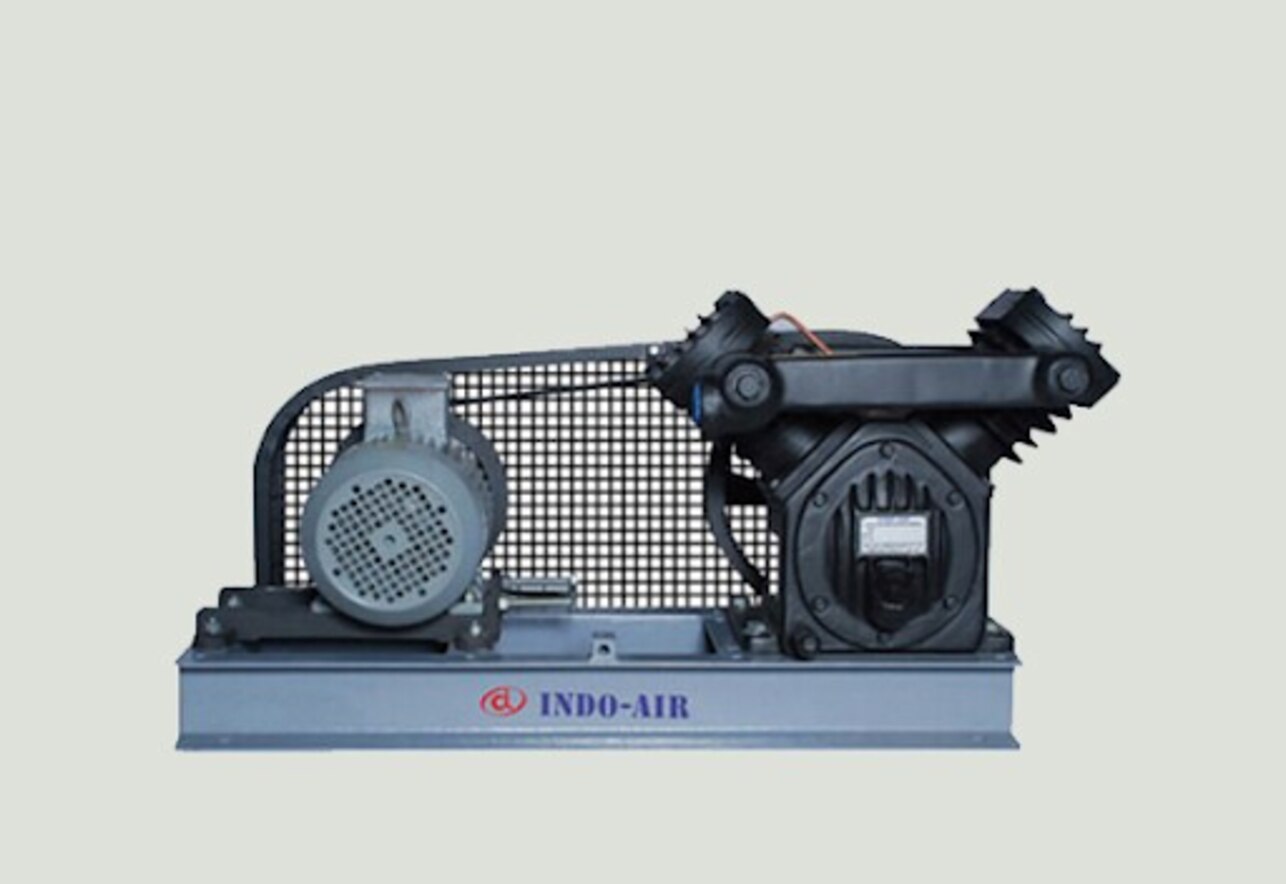
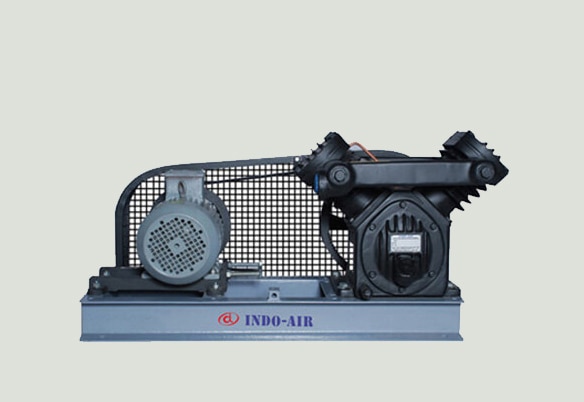 | VACUUM PUMP VACCUM PUMP DRY TYPE Vacuum pump is an universal design with the feature to convert it to a single stage compressor. View product → |
Frequently asked questions
Which industrial machines use dry vacuum pumps?
CNC machining centres, vacuum lifting systems, packaging machines, thermoforming equipment, printing machinery and material-handling systems use dry pumps when oil-free vacuum is required.
Where does vacuum workholding improve machining and production?
Vacuum workholding secures thin, large or irregular parts during routing, drilling, milling, grinding and cutting without clamping across the work surface.
How do dry pumps support heat, plastics and fluid-handling processes?
They evacuate air from thermoforming tools, assist degassing and drying, move powders or liquids, and support processes that cannot tolerate oil contamination.
What contaminants and operating conditions must a dry pump withstand?
Specify protection against metal dust, chips, resin vapour, moisture, chemicals, high inlet temperature and continuous duty when those conditions occur.
How should you compare and specify a dry vacuum pump?
Compare displacement, operating vacuum, evacuation time, duty cycle, inlet filtration, temperature limits, materials, noise, controls, service intervals and total operating cost.