
Pillar drilling machines are common in engineering workshops because they provide a stable platform for drilling operations while accommodating a useful range of component sizes. Yet machines that look similar can differ significantly in capacity, construction, speed range, table arrangement, and suitability for continuous work.
That makes application assessment an important part of choosing a pillar drilling machine supplier.
For manufacturing and fabrication businesses in Nashik, Maharashtra, the right machine should support both the physical dimensions of the workpiece and the frequency with which drilling operations are performed.
Understand Where Pillar Drills Fit
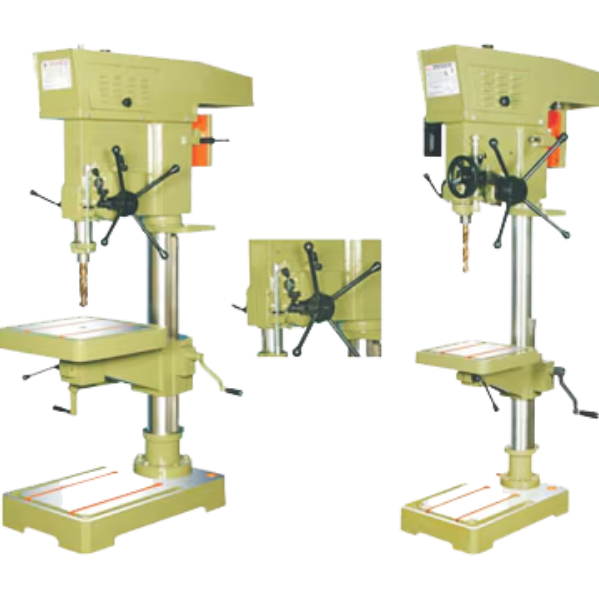
A pillar drilling machine typically uses a vertical column supporting the drilling head and adjustable worktable. This construction provides greater stability and workpiece accommodation than many smaller bench-mounted machines.
Common applications can include:
- General engineering
- Fabrication work
- Maintenance departments
- Tool rooms
- Component manufacturing
- Machine-building workshops
- Repair facilities
- Small-batch production
The versatility is useful, but buyers still need to match the machine to their particular operations.
Look Beyond Maximum Hole Diameter
Maximum drilling diameter is often the first specification buyers notice. It is important, but several additional characteristics affect practical usability.
Spindle travel determines how far the cutting tool can move vertically. The spindle taper affects compatible tooling. Table dimensions influence the size and positioning of workpieces, while the distance between spindle and column can determine whether larger parts can be positioned correctly.
Motor capacity and available spindle speeds also deserve attention, particularly when drilling different materials.
Rigidity Matters During Industrial Drilling
A stable drilling setup helps control vibration and maintain alignment.
Machine column construction, table support, spindle condition, work holding, and foundation all contribute to stability. If a workpiece is poorly clamped, even a capable machine may produce inconsistent results.
Industrial users should therefore consider the complete drilling setup rather than treating the machine as an isolated piece of equipment.
Fixtures and jigs can be particularly valuable when the same hole pattern needs to be repeated across multiple components.
Consider the Production Frequency
Occasional drilling and continuous production drilling create very different operating conditions.
A maintenance team may use a pillar drill intermittently for repair and modification work. A component manufacturer could operate it repeatedly throughout a shift.
Higher usage can increase the importance of motor suitability, spindle construction, lubrication, tool management, and routine maintenance.
Discussing expected duty with a pillar drilling machine supplier helps ensure that the machine is evaluated against realistic working conditions.
Give Operators Enough Working Space
Installation planning is sometimes overlooked until equipment arrives.
The machine needs suitable floor space, electrical provision, operator clearance, material-handling access, and sufficient room around the table for larger components.
In industrial areas around Nashik, many businesses install new equipment within functioning workshops. Planning the position beforehand can reduce disruption and make material flow more efficient.
Make Safety Part of Daily Operation
Operators should understand correct work holding, suitable drilling speeds, tool installation, emergency controls, and safe removal of swarf.
Loose workpieces should never be held by hand during drilling. Appropriate clamps, vices, and fixtures should be used according to the component.
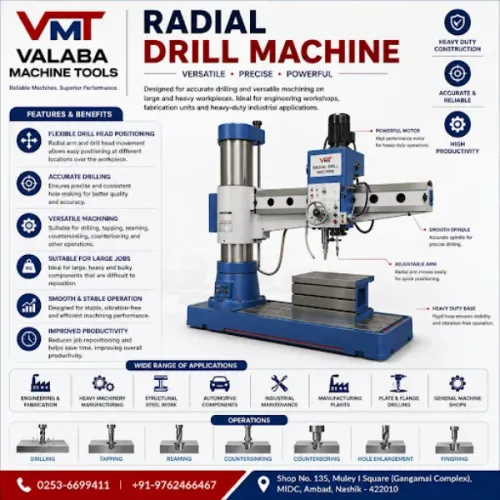
Valaba Machine Tools works with industrial buyers evaluating drilling and other machine-tool requirements in Nashik.
A pillar drilling machine should ultimately make workshop operations more controlled, repeatable, and practical. Defining workpiece dimensions, hole sizes, materials, operating frequency, tooling, and installation requirements before purchase provides a much stronger foundation for selecting suitable equipment.